Pardon the lack of formatting and lack of updates. I moved some things around (I think I finally deleted my G+ account) and ended up losing all of the images in my blog. It's been a bit discouraging to post and too time-consuming to fix. I'm going to try to get back into fixing those issues and posting again. I recently changed jobs as well, so I'm still settling in and trying to reorganize, but for July I participated in the Tour de Fleece challenge for spinners (in addition to reading an abundance of graphic novels, I also knit and spin).
I finally read Say I Love You by Kanae Hazuki and LOVED it.
I hope to get a real post up soon!
Saturday, July 26, 2014

Wednesday, August 14, 2013
Attack on Titan by Hajime Isahaya

Attack on Titan is one of the best manga I've read this year. At first I thought it was kind of weird and a bit violent and didn't want to keep reading. Then my friends would not stop talking about it and how awesome the characters are. So I kept reading and now I'm completely obsessed.
Humankind has been confined to a walled region because of the appearance of titans some hundred years ago.The military is tasked with keeping the people safe, but only when they make expeditions outside the wall are they really endangered. Eren Jaeger is the protagonist and he wants to join the scouting legion-- the part of the military that goes outside the wall. He and his friends dream of one day escaping from the walls.
One day a colossal titan appears at the wall outside of Eren's hometown along with an incredibly destructive armored Titan. The titans destroy the town and many of the people living there are killed, including Eren's mother. After this Eren vows to kill all of the titans (interesting note: in the Japanese version he uses the counter for insects instead of the counter for something larger, which really emphasizes his feelings toward the titans). He and his adoptive sister, Mikasa, and their friend Armin decide to join the military and become part of the 104th training corp.
Although there is violence in this manga, it's not just meaningless-- the story is really interesting. The titans appeared 100 years ago and no one knows anything about them or exactly what they are or where they came from. It takes place in a historical European setting, but it's unclear when it occurs. The story is very much so about human nature and motivations, as well as class society, and what is essentially the last stronghold of humanity after the world (presumably) was wiped out by titans.
Throughout the series the more we learn the more questions we have. Each volume will leave you eager to read more. If you liked manga like Death Note you may enjoy Attack on Titan. They're both somewhat dark, but very thought-provoking and engaging. Something to keep in mind-- the art isn't that great sometimes (occasionally Eren has a really long neck, for example), but don't let that deter you from reading the story! I have so many questions and theories I could share, but read the series, then let's talk.
Monday, July 8, 2013
Wandering Son Volume 4 by Shimura Takako
 | |
| Wandering Son Vol. 4 by Shimura Takako |
In the latest volume of Wandering Son (Vol. 4) we see a shift a bit of a shift in the story. This volume is less focused on the individual characters, but on those characters and their relationships. It really captures the complexities of teen friendships and love interests, though it is-- I think I'll call it realistic. "Realistic" because just because a character confesses their love, it isn't necessarily met with mutual feelings. Some of this is because of peer pressure-- accusations of being close to someone makes the two characters push each other away. Other times it's actually because the love interest doesn't share the same feelings. New friendships and confessions cause others to be jealous and feel spiteful towards everyone. Mixed emotions fill the characters as they finish their final year before junior high.
The characters are all so complex and flawed in their own ways and as a result make them easy to relate to. It's a great coming-of-age story and the art and story are so beautiful it would be a shame to not read Wandering Son. I still love this series and I can't wait for the next one.
Wednesday, July 3, 2013
Nothing Can Possibly Go Wrong by Prudence Shen & Faith Erin Hicks

I literally just finished reading this book. It's so good that I'm blogging about it immediately.
Right after his breakup Charlie finds out from his neighbor Nate that his exgirlfriend is ruining everything. The science club had money which the robotics club of which Nate is president planned to use to go to a robotics competition. Unfortunately, someone found out that the money was not earmarked specifically for the science club, so now it's up to the student council to decide what happens to the money. More unfortunately, the cheerleaders think they need the money for new uniforms. To convince the student council to give the robotics club the money, Nate decides to campaign for student council president. The cheerleaders enlist Charlie (against his will). It's an all-out battle... Until they all end up in trouble and no one is getting the money. Now they have to work together (?!!) to enter the Robot Rumble and win so that both the robotics team and the cheerleaders can get the money they need. Nothing can possibly go wrong, right?
This was a fantastic graphic novel about high school rivalry. The characters are all so perfect. I know I just shared my top 5 of the year so far, but I know for a fact this one has to be on my top 10 of the year already.
Sunday, June 2, 2013
Gate 7 by CLAMP

Gate 7 is the latest series in the west by the mangaka group CLAMP. You may know of CLAMP and recognize this style from one of their many series-- xxxHolic, Tsubasa: Reservoir Chronicle, Cardcaptor Sakura, Chobits, and many others.
The beautiful style of CLAMP that caught my attention years ago has developed to create stunning imagery in the characters, costumes, and scenery. Gate 7 takes place in modern day Kyoto, which is a city in Japan known for its traditional and historical architecture and sites.
The story follows Chikahito Takamoto who is visiting Kyoto on a trip. He accidentally meets Hana, Tachibana, and Sakura while visiting a shrine. He gets caught up in a battle between these three and supernatural creatures. A few months after returning home Chikahito suddenly is transferred to a new school... in Kyoto. His mother is against it, but because of her work overseas it's difficult to argue, so Chikahito ends up moving to Kyoto. While apartment hunting he runs into them again while searching for a restaurant, and then he comes to live with the trio in Kami-Shichiken Hana Michi.
Hana is some kind of supernatural being that fights monsters. Sakura and Tachibana are her guardians-- Sakura controls the dark element (Yin), Tachibana controls the light element (Yang). They both serve different purposes to help Hana battle-- creating barriers or weapons, for example. Chikahito Takamoto for some reason can go inside the barriers... Ordinary people can't do that. However, when they ask Hana which side he is on, she simply says that he is, "not." This is to say that he is neither for or against them.
Throughout the first three volumes of this manga we meet an interesting cast of characters. Masamune Date and Iematsu Tokugawa, two daimyo from the Sengoku period; and Hidetsugu Toyotomi, the retainer to his uncle Hideyoshi Toyotomi. Yep, you heard me, from the the Sengoku period. Hana, Tachibana, and Sakura are members of the Urashichiken Hana Michi, and their leader is Hidetsugu Toyotomi. One of their allies is Masamune Date, and the main antagonist is Iematsu Tokugawa. Their battles go back to the Sengoku period, and right now Iematsu is searching for Nobunaga's body to capture his oni.
Are you confused? It is a bit confusing. The Sengoku period is also known as the Warring States Period lasted from the mid-15th century to the early 17th century in Japan. It was a time of political and social upheaval and military conflict. Most of the characters this manga includes are historical figures from this time period, and yes, their conflicts are still present. Maybe you'll read more about the history after diving into these manga, but if you aren't up to that endeavor, at least read the notes at the end of the manga-- they go into a lot of detail about the historical figures, terminology, and items of note that you may not be familiar with.
Gate 7 is an interesting mix of historical events and supernatural beings in modern day Kyoto. If you're interested in Japanese history and mythology, beautiful art, and a great story, check out Gate 7 by CLAMP. It's full of fun characters, strange situations, and supernatural drama (and did I mention the amazing art?).
Friday, April 5, 2013
A Match Made in Heaven by Trina Robbins
My Boyfriend is a Monster #8: A Match Made in Heaven by Trina Robbins

Or...
Wings of love

Or...
Wings of love
Love is in the air
Fly me to the moon
Under his wing
Up, up and away
Feather kisses
Winging it
I touched an angel
I picked up this particular volume because Yuko Ota, illustrator of one of my favorite webcomics, Johnny Wander, is one of the illustrators! Xian Nu Studio is the primary illustrator. I had heard of the series, but I'm not that interested in paranormal romance stories so I didn't check it out sooner. I wish I had! From what I can tell, each volume is a standalone story, so it's okay to read them out of order.
This particular story features an aspiring graphic novelist named Morning Glory (Yuko Ota illustrates Morning Glory's graphic novel). She's the daughter of two folk musicians who are responsible for putting together a folk music festival. Her best friend is Julia, who lives in a broken home, and needs her BFF to help her cope. In walks Gabriel, and goodness gracious he is so attractive and charming! He actually is interested in Julia first, but since she's busy at home he ends up spending time with Morning Glory instead, taking her away from her BFF. In walks Luci, Gabriel's cousin, absolutely determined to keep them apart!
What is up with those cousins? Who are they? Why is Luci so against their relationship? Gabriel wants Morning Glory to push her comic and share it with other novelists and groups, but now she doesn't have time for Julia. For what exactly? A guy who won't even kiss her?
One of the reasons I think so highly of this graphic novel (and hopefully series!) is that it is wonderfully representative of diversity in terms of race, life experiences, and interests of the characters. It's awesome to see in a paranormal romance. Many fiction graphic novel series lack a wide range of diversity amongst their characters, and paranormal romance does not have a significant amount of diversity represented on their covers to make all readers feel compelled to read their stories.
The other reason: I'm a sucker for dramas and graphic novels that easily draw me in.
Wednesday, March 20, 2013
Coraline by Neil Gaiman

I recently read the graphic novel adaptation of Coraline by Neil Gaiman, adapted and illustrated by P. Craig Russell. I think the graphic novel definitely stands up to the creepiness of the book. The style of this graphic novel adaptation is much more attuned to classic American comics, instead of the usual graphic novels I read and have reviewed here.
Coraline and her family have moved to a new house and she's bored out of her mind. She's adventurous and curious-- probably a bad combination. She discovers a bricked-up door that is not actually closed off all the time, and she ends up in.... her house? She discovers her Other Mother and Other Father, somewhat "off" versions of her real parents. These Other Parents love her and want her to stay, but something is wrong, and now Coraline has to use her wits to escape the Other Mother's grasp.
This adaptation struck me as being a rougher style than I was expecting, and more reliant on the text to carry the story instead of the images. Coraline looks older than I envisioned her, and didn't give me the same impression as she did in the original. The representations of the Other Mother and Other Father were more horrific and grotesque as well. It's interesting to think about graphic novel adaptations of novels. I have enjoyed some of them and found them very true to the novels, and while I would say that this graphic novel adaptation of Coraline is true to the novel, I think it's a bit more intense! What you could imagine and picture in the story is visually in front of you, and possibly more graphic than you expected. I read Coraline several years ago now, and I have only most recently watched the stop-animation film adaptation, and I don't think any of the three can really be judged by the same criteria. They each offer a different experience for a different audience.
I think that this was a well-adapted graphic novel, in a style well-suited to a Neil Gaiman work. It offers readers a different experience. The art is dynamic, but simple. The quirky, creepy story works well as a graphic novel. The illustrator utilizes warm and cool palettes to represent different spaces and evoke certain feelings, and pays attention to the details and what colors to make them stand out. The expressions are fairly static, but the text keeps the story flowing nicely.
Fans of Coraline, Neil Gaiman, or P. Craig Russell would likely be interested in reading this adaptation. Readers of horror and fantasy novels and graphic novels are recommended to read this as well. While the comic is not gory, I wouldn't recommend it if you're squeamish about horror elements-- it's one thing to read about it, it's another to see it!
People talk about film adaptations of books quite often, but what do you think about graphic novel adaptations of books? How do you think the adapter develops their version to make it true to the original and a version that can stand on its own?
Tuesday, March 19, 2013
A Bride's Story Vol. 1 by Kaoru Mori

A Bride's Story by Kaoru Mori is a manga that makes me totally geek out over the 19th century Silk Road, pretty much right on par with how obsessed I was with my undergraduate work with art history (focus on Asian art). Where do I even begin? The story is engaging, and though it's not particularly fast-paced, it doesn't lack action. The setting is Central Asia, part of the Silk Road, in the 19th century. There are nomadic herdsmen and tradesmen as well as cities built up at intersections for trade routes. Central Asian horse-people are my absolute favorite cultures, and the history of the Silk Road is one of my favorite topics.
The bride-- Amir-- is a strong woman. She's 20 years old-- 8 years older than her groom-- and from a nomadic tribe in Central Asia. She can hunt (with a bow!), sew, ride, cook, and is quite independent. She surprises her new family all the time with her skills and knowledge, but they also see that she is caring and gentle with her husband and his family.
Karluk is 12 years old, which is a more typical age for marriage (Amir is regarded as a very old bride!), and is the heir to his family's wealth as part of a tradition of ultimogeniture (junior right). Karluk feels compelled to reassure Amir that he does not worry that she is older. He cares for his family and Amir, and often is taken aback by his strong bride (but in a good way!).
The art is absolutely beautiful. I cannot emphasize this enough. Kaoru Mori captured the art and styles of Central Asia wonderfully. I took time to admire the details on the clothing, architecture, and decor. Kaoru Mori made it a point to represent horses that looked like Central Asian horses, and in the notes she specifically refers to the Akhal-teke horse.
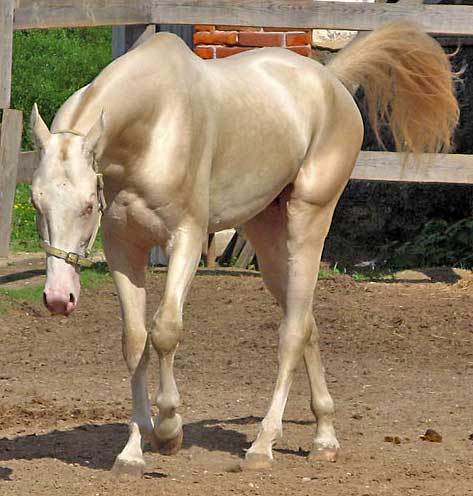 |
| Photo by SpiritOfTheDeep on DeviantArt |
She also captures the environment and nature to place even more attention on the setting of the story.
The first volume introduces the characters and poises the story for future events. This really is more of a slice-of-life manga; the chapters are tied together, but they each stand alone as separate stories as well. I finished the first volume, and though I'm eager to read the next, I don't feel like the story left me feeling unsatisfied at all!
A Bride's Story is a great graphic novel for readers who: like an interesting story; appreciate beautiful, detailed art; are interested in a historical fiction set in Central Asia; are Silk Road nerds like me; or are just looking for something new to read that deviates from action-packed or romance manga. I love this manga for its beautiful art, the Silk Road setting, and its awesome female protagonist.
If you're not into 19th century Silk Road, try Emma instead! Emma is set in 19th century Victorian London. It is also by Kaoru Mori, and features an upstairs-downstairs romance.
Monday, March 18, 2013
Hilda and the Midnight Giant by Luke Pearson

Hilda and her mom live out in the country and enjoy their life away from the town. However, they receive mysterious tiny letters that tell them to leave and that their house will be smashed! Hilda writes back to the hidden people, as they are known by her and her mum, telling them to leave them alone because they are nice people!
A voice in her head visits her, well not really, a hidden person visits her. After signing a stack of tiny papers Hilda is let in on the secret and can suddenly see the hidden people! Their house is surrounded by tiny houses and there are tiny people everywhere. Apparently Hilda and her mother live in the middle of one country, and their valley makes up three countries. They did live peacefully in the valley, but when the new prime minister of the hidden people was elected, he had promised to get rid of Hilda and her mum, so they aggressively began attacking!
All the while, a mysterious giant-- no, not a forest giant-- is seen nearby. It's up to Hilda to try to make friends with the hidden people (if not, Hilda's mom said they have to move to the town!) and figure out what this giant is all about.
I would recommend Hilda and the Midnight Giant to graphic novel fans or newbies. It's great for all ages, and it features a wonderful girl protagonist. The illustrations are full of rich color and excellent expression and character. I particularly like Twig, Hilda's pet (a sort of fox with antlers). It's a good standalone story that will be enjoyable to anyone looking for a quirky tale. It is however, the second Hilda book-- Hildafolk is the first, and this one is followed by Hilda and the Bird Parade. I didn't feel that not reading the first affected my enjoyment or comprehension of the story. This is an album-sized graphic novel (think the size of Tintin or Asterix) so the illustrations (full color, by the way) can be explored in more detail.
Sunday, January 20, 2013
Foiled & Curses! Foiled Again by Jane Yolen
Foiled (2010) & Curses! Foiled Again (2013) by Jane Yolen, Illustrated by Mike Cavallaro


I saw these books come across the desk as holds and really liked the style. When I finally was able to get my hands on them it was definitely worth checking out.
Foiled introduces Aliera Carstairs. She's a teenage girl that doesn't fit in with any particular crowd at school. What does she do? She fences. She's been fencing since she was 11 and, as her coach says, she "will go far." To Aliera, that means Nationals, but it might mean something more... Aside from fencing, Aliera spends her Saturdays with her cousin Caroline playing role-play games. Caroline is confined to a wheelchair, so Aliera's visits help her get in touch with the high school world that she's not a part of. When Aliera meets Avery Castle, she can't help but develop a crush on him, even with that weirdness during the frog dissection. When she goes to meet him on their first date, things start to get strange. Aliera is colorblind, which is incredibly rare in girls (both of her parents would have had to pass on the genetic recessive trait), but when she holds her junk sale foil (a weapon used in fencing) she can suddenly see things in color. A dragon, for instance. Now everything has changed.
Something I liked about Foiled, which is quite noticeable to the reader, is that it's completely monochrome until she begins to see magical things in color. She explains that she's colorblind and says that everything just looks grey. When colors are presented they are rich and vibrant, and I imagine that after not seeing color for your entire life that they would look more vivid than if you were used to seeing them. It was an excellent narrative tool in this graphic novel to distinguish Aliera's ordinary world from the magical elements. Colorblindness being represented isn't something that I see often in books for teens, and the fact that the series features two characters that have disabilities is great, especially since the story focuses on them as people, not as their disability.
Each of the chapters is titled with a fencing term, I'm not entirely sure if the particular term is relevant to the chapter though. I thought that was clever and stressed the significance of fencing in Aliera's life.
If you pick up Foiled, pick up it's sequel: Curses! Foiled Again. The first book is a lot of set-up and introduction to the characters. You could pretty much consider a pre-magical biography of Aliera Carstairs. Yes, when you read Foiled you will not be able to wait for its sequel. Despite the fact that it is obviously set-up to be a series, the first book still is excellent. The second book continues the story and is even more brilliant than the first. It's a fast-paced adventure featuring a strong teenage girl, any reader that likes fantasy and graphic novels would enjoy this series.
WWQFD? (What would Queen Furby do?) She'd read Foiled and Curses! Foiled Again.


I saw these books come across the desk as holds and really liked the style. When I finally was able to get my hands on them it was definitely worth checking out.
Foiled introduces Aliera Carstairs. She's a teenage girl that doesn't fit in with any particular crowd at school. What does she do? She fences. She's been fencing since she was 11 and, as her coach says, she "will go far." To Aliera, that means Nationals, but it might mean something more... Aside from fencing, Aliera spends her Saturdays with her cousin Caroline playing role-play games. Caroline is confined to a wheelchair, so Aliera's visits help her get in touch with the high school world that she's not a part of. When Aliera meets Avery Castle, she can't help but develop a crush on him, even with that weirdness during the frog dissection. When she goes to meet him on their first date, things start to get strange. Aliera is colorblind, which is incredibly rare in girls (both of her parents would have had to pass on the genetic recessive trait), but when she holds her junk sale foil (a weapon used in fencing) she can suddenly see things in color. A dragon, for instance. Now everything has changed.
Something I liked about Foiled, which is quite noticeable to the reader, is that it's completely monochrome until she begins to see magical things in color. She explains that she's colorblind and says that everything just looks grey. When colors are presented they are rich and vibrant, and I imagine that after not seeing color for your entire life that they would look more vivid than if you were used to seeing them. It was an excellent narrative tool in this graphic novel to distinguish Aliera's ordinary world from the magical elements. Colorblindness being represented isn't something that I see often in books for teens, and the fact that the series features two characters that have disabilities is great, especially since the story focuses on them as people, not as their disability.
Each of the chapters is titled with a fencing term, I'm not entirely sure if the particular term is relevant to the chapter though. I thought that was clever and stressed the significance of fencing in Aliera's life.
If you pick up Foiled, pick up it's sequel: Curses! Foiled Again. The first book is a lot of set-up and introduction to the characters. You could pretty much consider a pre-magical biography of Aliera Carstairs. Yes, when you read Foiled you will not be able to wait for its sequel. Despite the fact that it is obviously set-up to be a series, the first book still is excellent. The second book continues the story and is even more brilliant than the first. It's a fast-paced adventure featuring a strong teenage girl, any reader that likes fantasy and graphic novels would enjoy this series.
WWQFD? (What would Queen Furby do?) She'd read Foiled and Curses! Foiled Again.
Saturday, December 22, 2012
Adventure Time Volume 1
Adventure Time Volume 1 Created by Pendleton Ward; Written by Ryan North; Illustrated by Shelli Paroline and Braden Lamb

Total randomness and sporadic storytelling make Adventure Time fun, and this graphic novel totally emulates the same nature of the cartoon. This is a trade paperback collecting the story where the Lich King threatens to suck up the world in his bag and put it in the sun. All of the regular characters are featured-- Finn, Jake, Princess Bubblegum, Lumpy Space Princess, BMO, the Ice King, and Marceline. When everyone gets sucked up into the Lich King's bag they have to figure out how to escape and defeat the Lich King. Using typical Adventure Time fun they loads of crazy ideas. Jake Jet to carry them in space, pendants that protect you from mind control, making thousands of ice and sand Finn and Jakes to overwhelm the Lich King, you know, the usual. The Desert Princess (she can make anything out of sand!) helps save the day too when the earth comes out of the bag looking a little misshapen!
This comic includes a lot of nods to the original Adventure Time short and fan favorites, even if they don't make a lot of sense if you're not in the know. It really helps to read the dialogue with the characters' voices, but you'd have to have watched the show to know their mannerisms and speech quirks.
The only problem I had with this graphic novel was that the footnotes includes (which weren't vital to the story, but added a nice something) were printed in a bright, light green that does not show up well on white, making them extremely difficult to read!
If you're a fan of the series you'll love the Adventure Time comic! If you aren't familiar with Adventure Time it could be a great introduction! If you don't like Adventure Time... Why would you want to read this?
Monday, December 3, 2012
Wandering Son by Shimura Takako

Nitori-kun is often bullied by the other boys so most of his friends are girls. Takatsuki-san and Chiba-san both know his secret, and both treat him differently for it. Takatsuki-san understands because she too wishes she were the opposite gender. She sympathizes for him because as a girl she can easily have a male hair style and wear boy's clothes without drawing attention, but Nitori-kun cannot wear girl's clothes so easily. Her mother buys her dresses, so she gives them to Nitori-kun. Chiba-san also tries to give Nitori-kun clothes, but he refuses them because Chiba-san knows, but she doesn't understand and treats his identity and cross-dressing as a game because she thinks it's interesting. As the characters grow the encounter complexities in their relationships and identity.
Takatsuki-san sees another girl dressed in boy's clothes and wants to be like her. She begins to wear boy's clothes and has her hair cut short (like Nitori-kun's). When her period begins she struggles against her biologically female self and her actual identity. She often comes to Nitori-kun's rescue and is often tougher than he is.
The characters all have an amazing depth to them. The story explores the issues that a transgendered individual may go through personally, with friendships, and with family. It is highly insightful and sensitive to the characters' emotions and personalities. The perspectives of different people are shared as well-- Nitori-kun's sister, Maho; Chiba-san and Chiba-san's mother; and two adult friends the protagonists share.
While the story is focused on transgender topics, I think that this is a wonderfully moving coming-of-age story and captures the complexities of sexual identity, friendships, and family that teens face. The simple art style captures details beautifully-- the shine of one's eyes when they're about to cry, the significant gesture of changing clothes from boy's to girl's clothes for Nitori-kun (for instance, him entering the restroom or a dress hanging on the closet), and the shared room of Maho and Shuichi and how they interact in the space.
There are only 3 volumes published in the US right now, but I look forward to reading more of this story.
NOTE:
I have used the male and female pronouns for Nitori-kun and Takatsuki-san respectively because the honorifics and translation follow this as well. According to Japanese law, one can request a gender change on identifying documents after the age of 20 (and various other conditions), so since both characters are minors they cannot yet legally change their gender. Additionally, throughout the volumes I have read they are discovering this identity, it is not yet clear if they identify exclusively male or female yet. Matt Thorn, the translator, shares information in volumes 1 and 2 about being transgendered in Japan and views regarding LGBT people in Japan that is highly insightful. From what I know, when a transgendered person refers to his or herself as male or female then others should do the same. I have several friends who are transgendered, so this is a topic close to me.
Friday, November 30, 2012
Blue Exorcist by Kazue Katō
I realized that I haven't reviewed any shonen manga on my blog yet! Shonen manga are geared towards boys and feature more action and adventure with a strong focus on friends and rivals. Some popular shonen series are Bleach, One Piece, and Naruto.

Blue Exorcist by Kazue Katō is an exciting series that is fairly new. We began to see it in the US with the release of the anime in Japan, but the manga began in 2009 in Japan.
Two twin brothers are raised by Father Shiro Fujimoto. Rin Okumura is the protagonist-- he is reckless and always in trouble. Father Fujimoto ends up dying trying to protect him, which is when Rin discovers that he is the son of Satan. In trying to exact revenge he draws the Kurikara sword, which unleashes his demonic powers. When he meets Mephisto Pheles at Father Fujimoto's funeral he declares that he wants to become an exorcist like Father Fujimoto was, and Mephisto Pheles happens to be the headmaster at the True Cross Academy where young exorcists go to train.
Upon arriving at True Cross Academy Rin learns that his brother Yukio is not only already at True Cross Academy, but he is an instructor at the academy! Rin must conceal his nature and learn to control his powers. He wants to fit in and make friends, but he's also living in his brother's shadow.
Throughout the series we see Rin grow as a person, as well as discover the story behind Father Fujimoto, True Cross Academy, and the history of exorcists. Blue Exorcist is a shonen manga, so it focuses on action-- training, fighting-- and it's fast-paced. Although Rin is the main character each character is interesting-- there are very few that lack a background and purposeful role.
As far as shonen manga goes this has a stronger plot. The cast of characters is smaller and I think that allows deeper reflection on the characters and their goals and relationships than other series tend to do. Even the "bad guys" are complex and well-written instead of random enemy #5497 that you forget about in a few volumes. Right now the series in the US is at volume 8, but only up to volume 9 in Japan!
I recommend checking out Blue Exorcist now before it's a million volumes long (shonen manga series tend to be very lengthy... Bleach is at volume 56 right now, and that's not one of the longest).

Blue Exorcist by Kazue Katō is an exciting series that is fairly new. We began to see it in the US with the release of the anime in Japan, but the manga began in 2009 in Japan.
Two twin brothers are raised by Father Shiro Fujimoto. Rin Okumura is the protagonist-- he is reckless and always in trouble. Father Fujimoto ends up dying trying to protect him, which is when Rin discovers that he is the son of Satan. In trying to exact revenge he draws the Kurikara sword, which unleashes his demonic powers. When he meets Mephisto Pheles at Father Fujimoto's funeral he declares that he wants to become an exorcist like Father Fujimoto was, and Mephisto Pheles happens to be the headmaster at the True Cross Academy where young exorcists go to train.
Upon arriving at True Cross Academy Rin learns that his brother Yukio is not only already at True Cross Academy, but he is an instructor at the academy! Rin must conceal his nature and learn to control his powers. He wants to fit in and make friends, but he's also living in his brother's shadow.
Throughout the series we see Rin grow as a person, as well as discover the story behind Father Fujimoto, True Cross Academy, and the history of exorcists. Blue Exorcist is a shonen manga, so it focuses on action-- training, fighting-- and it's fast-paced. Although Rin is the main character each character is interesting-- there are very few that lack a background and purposeful role.
As far as shonen manga goes this has a stronger plot. The cast of characters is smaller and I think that allows deeper reflection on the characters and their goals and relationships than other series tend to do. Even the "bad guys" are complex and well-written instead of random enemy #5497 that you forget about in a few volumes. Right now the series in the US is at volume 8, but only up to volume 9 in Japan!
I recommend checking out Blue Exorcist now before it's a million volumes long (shonen manga series tend to be very lengthy... Bleach is at volume 56 right now, and that's not one of the longest).
Sunday, November 25, 2012
Dengeki Daisy by Kyousuke Motomi

Dengeki Daisy by Kyousuke Motomi is one of my absolute favorite shoujo manga. Honestly, it's probably the series that brought me back to reading shoujo manga. Dengeki translates to "electric shock," which likely refers to the fact that the series is fairly tech involved.
When Teru Kurebayashi's brother died she was left with a cell phone with the text-address of someone using the handle DAISY. She talks to DAISY every day via texting and relies on his kindness to help her through her struggles-- from school and mourning her brother. She is bullied often at school and one day when she breaks a window on accident she finds herself in the servitude of the irritable school janitor-- Kurosaki. Throughout the series Teru develops friendships with classmates, the janitor, and others and begins to unfurl the mysteries that surround her late brother and the secret identity of DAISY.
Teru is an extremely likable character. She is an ordinary girl, though a bit of a space-case (let's be honest-- who isn't). She is independent and positive. Unlike some shoujo manga protagonists her focus isn't finding love or school drama. After her brother's death she is sought by hackers to find some piece of data he may have had. They are convinced that she has it, and DAISY always comes to her rescue. Teru learns to become strong because she wants to make her brother-- and DAISY-- proud, and her friends and allies help her along the way, letting her discover more about her brother than she had ever known before.
Dengeki Daisy is full of action and interesting characters. Each volume is enjoyable and new-- never predictable or filler. For girls reading graphic novels about girls that isn't just about romance is sometimes a struggle, but Dengeki Daisy manages to have action and a quality plot AND still include aspects of romance and friendships to make it a shoujo manga.
This is an ongoing series with 10 volumes released in the US right now.
Thursday, October 4, 2012
Otomen by Aya Kanno

Otomen by Aya Kanno was a previous TAB pick, which is why I decided to
check out the series. Asuka Masamune is a guy that likes to do crafty things
like sewing and knitting, he likes cute things, and he loves shoujo manga.
Asuka’s father was also into cute and girly things, and his mother made him
ashamed to like girly things like his father did. However, when a girl named Ryo
Miyakozuka transfers into the school Asuka finds it more and more difficult to
hide his interests.
The more he thinks about her, the more he wants to do crafts, bake, and buy cute things. Ryo is the daughter of a dojo master, and she only has brothers; she isn't very good at girly things and aspires to be tough. Most of the students in the school think Asuka is tough because he's on the kendo team and he does judo, but he has to work hard to hide his girly interests. When he meets Ryo and Juta he is able to let down his guard and share his real interests by bringing them homemade meals for lunch and by teaching Ryo how to bake a cake.
Why is Juta so interested in Asuka and Ryo? Why does the story of Love Chick seem so familiar? Can Asuka convince Ryo's father that he is worthy of her?
Otomen is a play on words: "otome" meaning young lady and the English word "men." This word is used in the manga to describe a man that likes girly things, like Asuka. I like a graphic novel that breaks gender stereotypes, though this is still very much a shoujo manga and would be more appealing to girls or guys that like love stories. The characters are all interesting, and relatable to any teen that has ever struggled to fit in.
The more he thinks about her, the more he wants to do crafts, bake, and buy cute things. Ryo is the daughter of a dojo master, and she only has brothers; she isn't very good at girly things and aspires to be tough. Most of the students in the school think Asuka is tough because he's on the kendo team and he does judo, but he has to work hard to hide his girly interests. When he meets Ryo and Juta he is able to let down his guard and share his real interests by bringing them homemade meals for lunch and by teaching Ryo how to bake a cake.
Why is Juta so interested in Asuka and Ryo? Why does the story of Love Chick seem so familiar? Can Asuka convince Ryo's father that he is worthy of her?
Otomen is a play on words: "otome" meaning young lady and the English word "men." This word is used in the manga to describe a man that likes girly things, like Asuka. I like a graphic novel that breaks gender stereotypes, though this is still very much a shoujo manga and would be more appealing to girls or guys that like love stories. The characters are all interesting, and relatable to any teen that has ever struggled to fit in.
Friday, August 24, 2012
Comet in Moominland by Tove Jansson
In which Ashley reads books about strange creatures...

Several friends mentioned their fondness for Tove Jansson's Moomin series, and I decided to finally read the series. Tove is a Swedish-speaking Finnish artist who published these beloved stories, but the stories have been translated into English throughout the years and I found the almost-complete series in my library. (Mysteriously the first book is difficult to find, but due for reprinting this fall).
The Moomin series revolves around the Moomin family-- Moomintroll, Moominmamma, and Moominpappa. Another creature called Sniff lives with them, and throughout the series more creatures come to live with them in the Moominhouse (which is blue and round with rope ladders from the windows because stairs take too long).
Comet in Moominland is technically the second book, but the editions by Squarefish are referring to it as the first. They came to Moominvalley because the flood washed their house here-- which is referenced throughout the book, but little background exists in this story since we theoretically already read The Moomins and the Great Flood. Regardless of that strangeness there are no holes in this book that would take away from it.
The book begins with Moomintroll and Sniff discovering pearls and a cave. Eventually Muskrat came to the house and predicted a ____ and unnecessary disaster. Strange things started to happen-- the pearls arranged themselves into a star with a tail pattern, as did gulls, jam jars, and pears. When Muskrat tells them it's a comet, they decide to journey to the Observatory to find out what and when it was going to happen.
The language and humor in the books are sophisticated and highly accessible for most readers-- there may be unfamiliar phrases or uncommon expressions to some readers. The characters have unique personalities that complement each other and further the plot.
These are stories about adventure and friendship that are perfect for elementary-aged children, and perhaps middle grade children, but any reader would find the tales enjoyable.
Sunday, August 5, 2012
Mameshiba: We Could Be Heroes!
Did you know? ...

Mameshiba: We Could be Heroes! is a fun, colorful graphic novel that includes three short stories about the mameshibas, or bean dogs.There are also single-page comics about a Mameshiba named Tiger Bean.
The graphic novel is actually based on a Japanese merchandise franchise, which led to television shorts, short comics, and these graphic novels. The mameshibas spout random facts when encountered, always beginning by saying, "Did you know?"
The stories included are Chili Bean in Love, Sweet Tiger Bean, A Whole Lot of Cocoa, Science! With Tiger Bean, Once Upon a Time..., and Good Night, Tiger Bean. The Tiger Bean stories are all single page stories about a little bean named Tiger Bean who isn't very bright (but rather cute).
In Chili Bean in Love, Chili Bean must win a sports competition to win his love's heart, but who is he in love with anyway?
A Whole Lot of Cocoa is about a magic show that doesn't go so well. This story introduces the ultra-cool Mameshibot and some of my favorite moments in this graphic novel.
Once Upon a Time... shares a story about scary monsters and how the mameshibas save the day in a fantasy land.
If you like randomness, cute characters, and are looking for something new, check out Mameshiba: We Could Be Heroes!
The Mameshiba stories are great for any audience. Boys and girls will both enjoy this graphic novel, and although it would be recommended for elementary-age children, middle school students would enjoy the stories as well.

Mameshiba: We Could be Heroes! is a fun, colorful graphic novel that includes three short stories about the mameshibas, or bean dogs.There are also single-page comics about a Mameshiba named Tiger Bean.
The graphic novel is actually based on a Japanese merchandise franchise, which led to television shorts, short comics, and these graphic novels. The mameshibas spout random facts when encountered, always beginning by saying, "Did you know?"
The stories included are Chili Bean in Love, Sweet Tiger Bean, A Whole Lot of Cocoa, Science! With Tiger Bean, Once Upon a Time..., and Good Night, Tiger Bean. The Tiger Bean stories are all single page stories about a little bean named Tiger Bean who isn't very bright (but rather cute).
In Chili Bean in Love, Chili Bean must win a sports competition to win his love's heart, but who is he in love with anyway?
A Whole Lot of Cocoa is about a magic show that doesn't go so well. This story introduces the ultra-cool Mameshibot and some of my favorite moments in this graphic novel.
Once Upon a Time... shares a story about scary monsters and how the mameshibas save the day in a fantasy land.
If you like randomness, cute characters, and are looking for something new, check out Mameshiba: We Could Be Heroes!
The Mameshiba stories are great for any audience. Boys and girls will both enjoy this graphic novel, and although it would be recommended for elementary-age children, middle school students would enjoy the stories as well.
Friday, August 3, 2012
Library Wars: Love and War

Based on the description of Library Wars: Love and War, I wasn't sure how much I'd enjoy it. I'm a librarian, so I felt that I should like it, but I have been reading a lot of shoujo manga lately that I haven't enjoyed.
It's the future and the government has created a committee to rid society of books that are "unsuitable." In retaliation, libraries create their own military group called the Library Defense Force to protect their collections!
Iku Kasahara has left home telling her family she was going to be a librarian, but secretly she has joined the Library Defense Force as a soldier. Why did she choose this dangerous life? Because of her prince that rescued her favorite book from confiscation by the government when she was younger. She wants to be just like him.
This is not the typical shoujo manga you may be familiar with, but when it comes down to the relationships Iku has with other characters and their personalities maybe it is. Her drill instructor is out to get her, and her new partner has little respect for her and thinks she's useless. Her best friend is a librarian and totally attractive and gets all the boys. Iku? She's clumsy, barely studies, and always runs into trouble. The story and character development has significantly more substance than many shoujo manga, and therefore appeals to fans of graphic novels and readers who are new to the format.
If you're looking for a new shoujo manga that is thought-provoking and exciting, but still full of complicated romance, check out Library Wars.
The manga is based on Toshokan Sensō, a light novel (a book for teens, like what we call YA Lit) in Japan. The plot is based on the Statement on Intellectual Freedom in Libraries in Japan in 1954. Below is the opening page of the manga, which is based on actual articles from the real Statement on Intellectual Freedom in Libraries.

(Teens at the Arlington Library, the teen library blog of my library system, has shared this post on their blog as well)
Subscribe to:
Posts (Atom)